
Saturday, September 7, 2024
Summer of Photos from the 1970s: Polyester Turtle with a Bicentennial Belly
Sunday, August 11, 2024
Summer of 1970s Photos: Smiling at the Lost Generation
Throughout 2017, I spent a year writing about the Lost Generation - those born in the early 1880s to about 1900, who endured WWI, and a pandemic. Generation X is also considered a 'lost generation' - from our formative years through adulthood there was once again, in history, one major large scale crisis after another.
To be Generation X means your early life overlapped with the end of the lives of the Lost Generation. There was this window of time, when we still had neighbors, friends, and other loved ones in our lives from that generation. We were fortunate if we got to know our Great Grandparents, even if it was only for a short time. To go back three generations in time is to find your generational kindred spirit.
It was America's Bicentennial year when this photo was taken. There is the red shag carpet, and the fabric is printed with the shapes of retro Christmas tree ornaments. The colors and aesthetic of this 1970s space look like the 1960s have not yet left the collective consciousness in pop culture or interior design.
![]() |
| One lost generation smiles at another lost generation |
Here I am as a brand new Gen Xer, Irish on my father's side, sporting red hair before it turned blond, a color that came from the other Northern European people on my maternal side. I am smiling at my Lithuanian Great Grandfather.
And while this is just me as a baby meeting my great grandfather, this is, in a larger sense, one lost generation smiling at another.
Every generation has an epic collective story to tell as they grow older, especially if you are a lost generation. This means your path has been harder, the road has been longer. If you use this as a chance to grow in grace, and to not become bitter, it means your connection to other people can be greater, your compassion can be deeper. At the same time, I hold enormous space for the way people who have been through a hard life can struggle to focus on the positive, who can wrestle with wondering why it all had to be so difficult. I have struggled, too. And so did the Lost Generation. Among other things, they were all detrimentally affected by WWI in some way, and like us, experienced a pandemic. They were more susceptible to this virus than those older and younger than themselves during the years of 1918-1920 due to a flu they had gotten as children - one more thing that made them different, misunderstood, or lost. The effects of such history altering events were with them for the rest of their lives, even those who never talked about it - maybe especially those who never talked about it. It appears some had 'long-flu' then, like some have long-covid now. While they called it 'shell-shock' back then, we now call it PTSD. It can be unfortunate the way history repeats itself.
My Great Grandfather has that classic story of coming to America as an immigrant, of seeing the Statue of Liberty for the first time and all the emotion that went with that. He immigrated by himself when he was only 13 years old. And then spent his life working in the boiler factory in Kewanee, Illinois. I am still piecing together details of his life, but no one crosses the Atlantic at the age of 13 if their life is easy.
![]() |
| The Lost Generation watching over Generation X |
Throughout history there have only been small windows of time where two lost generations got to be together. And while we can find ourselves a bit lost in this world, what we do have is each other. When we find ourselves lost on the timeline of history in which we find ourselves, we can reach back out to our kindred generation with a prayer, a word, a moment. We can hold their life's mementos in our hands, we can tell their stories. We can remind them we loved them then, and that we love them now. Those on the other side don't want to be forgotten.
Sending gratitude from Gen X to the Lost Generation, for the days, hours, and moments you spent with us. Thank you for the ways you still watch over us. Thank you for the ways you still show up for us in distant memories, in present dreams.
This is just one great grandfather watching over his great granddaughter's crib. And yet, in a larger sense, this is the Lost Generation watching over Generation X.
(c) 2024 All rights reserved, Chloe Koffas
Sunday, July 28, 2024
Summer of Photos from the 1970s: Late 1970's Christmas Morning
The joys of a late 1970's Christmas! I remember waking up that morning to some pretty amazing stuff. I ran down the hallway and into the living room and didn't even know where to begin! Some things were on display on the hearth (where Santa left stuff when he came in through the fireplace) and some things were wrapped by my parents and ready for me to tear them open. It was a good day!
Here's the rundown:
1) A dolly that looked just like me, and as you can see I was bouncing off the walls in happiness because my holiday morning hairstyle is already falling apart! I always wanted a daughter, even then - at the time, this doll was the closest thing I could get to that!
2) A Snoopy house - you could wind up Snoopy and he would walk right in! Woodstock was there on top proudly flying a flag.3) I think the little blue house that is somewhat obscured by my curls is a Weebles house? (Weebles wobble but they don't fall down as the commercials used to say!)
4) An aardvark with a velcro tongue that you would push around on the floor and he would pick up big blue felt ants. He could also pick up socks laying around your room if you didn't feel like picking them up yourself. He was affectionately named 'Alvin the Ardvaark' by Kenner, a toy company known by multiple generations from 1946-2000.
While the gifts were great, it was the energy that was in the air that I loved most, the anticipation, the excitement. As a toddler tries to understand the world around them, there is this realization that that, even though life was full of packing tuna sandwiches in a metal lunchbox and heading to preschool early on a regular weekday, there were these days in the year set aside for pancakes on the griddle, and stuffing on the stovetop; days that were for joy, for love.
And the big brass candle holders sporting garland and ornaments couldn't be more 1970's if they tried. They wanted to match the gold shag carpet. If you are looking for a Gen X Christmas aesthetic, you've got it all right here...and to the far right on the hearth is a box of 1970s matches, perfect for lighting a 1970s fire in your fireplace at the end of a holiday, when a good time was had by all!
(c) 2024, Chloe Koffas
All rights reserved on photo and writing
Tuesday, June 18, 2024
Summer of Photos from the 1970s: Lulu and I in the Backyard Sunshine
In the 1970s, I had a dog named Lulu who would sit with me in the sunshine, chatting about things. I'd tell her stories, and she'd nod in approval. Sometimes we'd quietly observe the adults, and their strange and mysterious ways. They'd be doing things adults did that we didn't really understand, like using can openers or paying the electric bill, and we'd collaborate on how baffling it all was.
Here I am in my cowgirl dress, complete with a bandana and a 1970's retro-style Goody brand red plastic bow barrette placed squarely on my head. The morning sun would lay soft on suburban green grass that looked a whole lot like the shag carpet in the house. Lulu and I would sometimes spend time together before I was placed in a car seat and off to church. While coffee hour with humans can be nice after church, a pre-church social hour with your dog is the ideal way to spend the earlier hours of a Sunday morning.
Lulu's face showed she was already pretty old by the time I was born. She had probably seen the 1960s and the 1970s both, and considering all the social upheaval of the time, that was a lot for a dog to take in. Sometimes we would watch Walter Cronkite deliver part of the nightly news and then we'd wander off to see what toys we had left lying around the backyard earlier in the day. She seemed like a dog who understood everything. She had been around long enough to see the ridiculous vanity of the human situation, and at the same time, all the beauty, love, and humor of it. Being an old soul myself, there was a lot of camaraderie between us.
In my earliest of days, her soft little ears were always there for me to hold gently in my hands. Her affirming looks showed me she knew I was small and that she needed to watch out for me. Her black coat was ever-huggable in the warm sun; her golden eyes were wise. Here's to every Generation Xer who remembers a dog from their growing up years, may we find them again on the other side.
I loved her so. Lulu and I.
(c) 2024 by Chloe Koffas - All rights reserved
Sunday, June 9, 2024
Summer of Photos from the 1970s: Blue Photo Albums and Backyard Bliss
It's the Collective Experience....
Ever since I started blogging about Generation X in 2011, I deeply hoped to make my way back to the photos of my early childhood. It took a long time to find my way back to them. Posting pictures of your growing up years illuminates the collective experience you have with your generation in a very real way. It's the details, the pop culture things that are framed in the picture, the album in the background by some one hit wonder band you forgot and then lovingly remembered once again, it's that kitchen with the avocado green General Electric stove in the background and the comforting smell of dinner baking inside. You see some detail in one of your photos, or in someone else's photo, and a flood of emotions goes over you. If you are Gen X, the things in your childhood photos, like the toys you played with, or the books that were on your shelf are a part of my story, too - I would have played with some of those same toys as a tot, I would have read some of those same books as a child.
The Eclipse
Last spring, I went to Texas to visit my father. He invited me to go see the April eclipse, and I had this intuitive feeling that something lost would be found during that visit. I was shocked and overjoyed when old 1970's photo albums emerged from a shelf in a closet - I spent an afternoon opening the pages and taking digital photos of analog ones. Emotion came over me like a hard desert rain. I hadn't seen some of the photos since the 1980s, I hadn't seen some of the pictures since the 1970s, and some I had never seen. We will remember 2024 as a year of a big eclipse in America, and it's incredible the way that sometimes what was lost can somehow be found, yet that's how eclipses work - there is a darkness, and then parts of the universe are brought out into the light. So while the sun shines, this will be my summer of posting 1970's pictures that are from my childhood. And we will begin with a picture from summer, and a checklist of official funny things 1970's tots did....
While the above list mentions a few things floating around in the pool, like my Fisher Price Little People car - the red one I am holding in my hand in this picture - I should also mention a few more things that are worth noticing just for the humor of it all:
Here's to believing what was lost can be found again, here's to dusty old blue photo albums of the 1970s that hold our collective memories. When I have seen others Gen Xer's pictures from the 1970s, not knowing that I would ever find my own 70s pictures again, I would look for myself in their pictures - my old toys, my old books, my own story. Now that I finally have made my way back to my old pictures, if you want to, you can look for your story in mine.
(c) 2024 by Chloe Koffas - all rights reserved
Sunday, March 17, 2024
How Gravity Bends Light
![]() |
| The Pillars of Creation - (c) NASA - public domain |
The labyrinth is thoroughly known...
we have only to follow the thread of the hero-path.And where we had thought to find an abomination
We shall find God.
And where we had thought to slay another
we shall slay ourselves.
Where we had thought to travel outwards
we shall come to the center of our own existence.
And where we had thought to be alone we shall be with all the world."
-Joseph Campbell
![]() |
| (c) NASA - public domain photography |
He once spoke about the first full image of earth, the first one humanity saw collectively of the Earth as a whole that was taken in the 1970's. This image, The Blue Marble went into circulation during the more formative years of Generation X. It may have given our generation a deeper sense of the collective experience of humanity when we were still impressionable in a way we maybe were not even conscious of. Campbell said, "Our world as the center of the universe, the world divided from the heavens, the world bound by horizons in which God's love is reserved for members of the in group: that is the world that is passing away. Apocalypse is not about a fiery Armageddon and salvation of a chosen few, but about the fact that our ignorance and our complacency are coming to an end."
2024 includes a partial eclipse on March 25th which will create a collective experience for most of North and South America. This year also includes a full eclipse on April 8th, which I am planning to go see in Austin. I am not sure what colossal shift might take place for us collectively April 8th, or what light-bending experience will happen for me individually. The path the Sun will take on that day is essentially the journey my ancestors took once they landed on the shores of the US and slowly migrated, over generations, to Texas. I will be thinking of their journey, along with my own journey so far, and where to go from here, between the light and the shadows. For a few minutes of totality, the brightness of day will become one with the darkness of night.
How does gravity bend light? It's a complex physics formula, so for those of us who'd like to look at it for a moment in simple terms, we could say it's the way stars sometimes appear in the wrong place....
Einstein, who was from the Lost Generation, hypothesized that gravity is a warping of time and space - an impact to the 'fabric' of the universe. He believed a large object like the sun could distort spacetime enough that gravity could bend light. While he published his General Theory of Relativity in May 1916, it was during the eclipse of May 1919 when scientists observed that some stars appeared in the wrong place based on previous measurements of the universe - showing evidence of Einstein's theory.
Maybe every generation gets at least one moment to graze the surface of the sun.
How do we, as humans, who find ourselves and our world in so many places of darkness, bend the light toward ourselves, and toward others? Maybe this is anything that takes something terribly wrong and makes it right. Maybe it is overcoming the obstacles that block us, maybe sometimes its fighting for something, and other times it is letting go of the fight and finding our peace.
![]() |
| (c) NASA - Silent Generation Buzz Aldrin's footprint on lunar soil |
![]() |
| (c) NASA - Aurora Borealis St. Patrick's Day 2015 image credit:Sebastian Saarloos |
How does gravity bend light?
Einstein explained it with his theory of relativity.
Joseph Campbell explained it by showing that when the hero or heroine comes home from the journey having found the answer - and the answer is always in some way rooted in forgiveness and unconditional love.
Some silver thread keeps us bound to this earth, for a time, and that thread is woven into the tapestry of the whole human story. Each religion, culture and generation may be, as it turns out, more alike than different, though we can only see this when we can see a much bigger picture.
If we are in the modern Western world, we see time as linear. If we can bend the way we see time, even just for a moment, we can bend light as well, and this is where we can get a glimpse of the eternal beauty -- the reality that all of time is one. And when we know this, both in our mind and in our heart, we know that anything that has gone wrong can be made right again.
This is how gravity bends light.
___________________________________________
(c) St. Patrick's Day 2024 - Chloe Koffas - all rights reserved
Sources:
The Hero with a Thousand Faces - Joseph Campbell
ncronline.org/blogs/earthbeat/eco-catholic/joseph-campbell-earth-heavens
science.nasa.gov/eclipses/history/
NASA photos are public domain
And a piece about the 2017 partial eclipse as seen from Northern California, with thoughts of the Lost Generation:
Saturday, December 23, 2023
A Charlie Brown Christmas and the Glow of Colored Lights
![]() |
| These are beautiful, though Charlie Brown sees a tree that is much more real in the distance, one that is a little beaten down by life like he is |
![]() |
| Linus and his blanket at the Christmas tree lot |
Linus shows his support like a good friend should, and brings his blanket to the event, as always. Maybe being misunderstood is bearable when you have at least one friend who is willing to go with you on the journey. Who doesn't want to turn around and see this guy smiling at you?
There is something powerful about the collective experience a generation shares, and there is something amazing about how the smallest of things can help us make that connection. When I would watch Peanuts holiday specials as a kid, I would get this sense that all my problems would go away for those 30 minutes, and I loved the feeling I was watching it with all the other kids in America at the same time.
I went downstairs this afternoon, tired, holding an empty laundry basket, clean clothes just dropped off in an upstairs room, and as I walked toward the lights of the Christmas tree in our living room, I was thinking of everyone I have loved and lost. I was looking under the tree to see if I had forgotten to put anything there. I was thinking of how I ran out of time to do all the things I meant to. I was thinking of Gen X Christmases come and gone, thinking of how I need to get dinner on the table and of the suitcases I need to pack. I was thinking of all the problems I have that still did not get solved in 2023, of how much work there will be to do in the new year, and all the things I still need to sort out in my life, and said to no one in particular, "I feel lost in time and space."
And my daughter walked up to me and whispered in my ear, "You are right where you are supposed to be." That might just be about the most comforting thing anyone has ever said to me.
As hard as all of this is, as bleak and cold as this collective dark night of the soul has seemed, maybe we really are right where we are supposed to be - and there is a hope in that.
Merry Christmas, Generation X,
to you and to the younger generations you share your holiday specials with.
How we made this diorama
box for scene: painted wood crate purchased from a craft store
moon and sparkly night sky: scrapbooking paper
trees: dyed bottle brush trees, some with snow flocking
ground: white felt
snow drifts: cotton
fence: purchased unfinished from a miniatures store and painted white
Linus' blanket: a piece of my old blue tee shirt
tree lot string lights: battery powered colored fairy lights attached with white electrical tape
And for one of our favorite hot chocolate recipes:
Hot Chocolate and a Charlie Brown Christmas
_________________________________________________________________
(c) 2023 writing and photos by Chloe Koffas
Saturday, November 18, 2023
A Charlie Brown Thanksgiving and the Glow of Autumn Lights
Gen Xers grew up with A Charlie Brown Thanksgiving as a mainstay TV special every year just before the big Fall holiday. I loved to watch it decades back as a kid with a bowl of popcorn. If it was snowy or a little stormy that night, that was even better.
Below is the wood crate diorama my daughter and I put together many years back. In the actual story, the Thanksgiving meal takes place outside on a sunny day. We tried capturing this, though it just seemed to lack something - like it was missing the kind of magic the pumpkin patch had in It's the Great Pumpkin, Charlie Brown. So this turned into a different interpretation - more of a late in the day scene. Maybe this is how it would look if the meal got delayed until evening....
| Three inch tall friends gather around the table for a late in the day Thanksgiving dinner - A Charlie Brown Thanksgiving is served! |
We took these pictures way back in 2018, they were forgotten about and just recently found, just in time for Thanksgiving 2023 which is perfect since this year is the 50th anniversary of A Charlie Brown Thanksgiving. The original broadcast was on November 20, 1973. From then until now, this is one of our truest touchstones as a generation.
| Woodstock cuddling with Snoopy behind a plastic bread loaf as they look at the Thanksgiving table |
My daughter took this picture to make it look like you are looking inside at the cozy warmth of a table of gathered friends while the frosty purple glow cast down by the moon gives you the chilly feel of an Autumn night.
Wednesday, February 15, 2023
Schoolhouse Rock 50th Anniversary
If you missed the Schoolhouse Rock 50th Anniversary singalong earlier this month on ABC, be sure to go back and watch it on Disney+, or be sure to watch whatever your favorite Schoolhouse Rock song was on YouTube.
Not to let out any spoilers if you're late to the party like I was, but I'm not sure how you could pack more Gen X retro pop culture into three minutes than when the Muppets themselves cover a Schoolhouse Rock song.
On another note, the adjectives song sometimes gets stuck in my head and goes on repeat play for hours at a time while I do dishes, laundry, and try to get stuff done. The only thing that makes it stop is if I play some 1990's Nirvana. By design, these songs were supposed to get stuck in your head (how else would we have remembered our multiplication tables?) so just letting you know how to fix the problem if the same thing happens to you.
In case you were wondering, after all these decades three is STILL a magic number! I love that Blind Melon covered this magical song years back and that Black Eyed Peas played the song for the 50th anniversary show.
My daughter and I have watched many of the original videos together over the years, and we usually enjoy these with root beer or Creamsicle floats...
she recently asked an important question, "Why is Interplanet Janet okay hanging out on the sun (she says it's a lot of fun) but then she says that the planet Mercury is too hot (the mercury on Mercury was much too high)?
That's a good question....
Tuesday, November 29, 2022
Becoming a Warrior
![]() |
| Cover for Catherine's new book: image used with permission |
Chloe: A Wrinkle in Time is a story that has been significant to Boomers, Generation X, and now younger generations. You wrote in your memoir that the movie was about giving others a chance to create a new narrative for their generation. As the producer, you chose Jennifer Lee, a Gen Xer, to write the script, and in the movie, the father (played by Chris Pine) stands out as distinctly Gen X because of the pop cultural references he makes. The heroine in the story is Meg, a Generation Z girl (played by Storm Reid) who has a beautiful mind and a big heart. Would you say this is a story that connects generations?
Catherine: Absolutely! The enduring wisdom of A Wrinkle in Time is that we are all on a journey to discover who we fully are and our place in the universe. I think everyone wants to believe in the power of love and Madeleine reminds us that love is action, not just a feeling. My hope is that Gen Xers will find something familiar in a memoir told from a Boomer's point of view.
Chloe: My own reference point for Wrinkle is that I remember seeing it on the desks of my elementary school classmates in the mid-1980's. I was intrigued by the way the book seemed to have a mysterious or even mystical presence to it, so I checked it out from my school library and experienced the story for myself. Not only does the story fit into the sci-fantasy genre, it also covers the spiritually esoteric concept of tessering ('wrinkling' space and time). What would you say initially intrigued you most about the book when you first discovered it as a child in the 1960's?
Catherine: I wasn't a great reader before a I read A Wrinkle in Time. I wanted to be outside climbing trees or playing kickball. I never knew books could inspire in me the desire to find answers to so many questions. Who were Euclid, Michelangelo, and Buddha – all mentioned as fighters in the story – and what did they have in common with Jesus? I was also very excited to discover that a girl – even a girl who was trying to get rid of her faults – could be a hero. Most significantly, the book gave me hope when President Kennedy was assassinated.
Chloe: Even when we have some of the connections to help us achieve a dream, we still have to work incredibly hard and forge through roadblocks to make our dreams tangible. In your memoir, you write about your journey of becoming a fighter, a warrior, in a way that can help others do the same. Someone with a dream they are working toward could read your book and use it to help them as a sort of roadmap to overcome their own obstacles. Can you share your thoughts on this?
Catherine: No two journeys are the same, but hopefully reading about how I overcame my obstacles will inspire others to find ways to overcome their own. I found great wisdom in Robert Louis Stevenson's quote, "It's better to travel hopefully than to arrive." My hopefulness was my guide that sustained me, I think one other thing to remember is that a dream is a living idea – it will evolve as you evolve. Mentors and supporters can be found in the most unlikely places – no one achieves a dream on their own. As you build your team, learn from others, and let your dream expand with new insights to make it better!
Chloe: What was the best part about reading A Wrinkle in Time as a child in the 1960's, the best part of producing the movie (2018), and what was the best part about writing your memoir which you are now launching?
![]() |
| Times Square when the movie was released - and a beautiful moment in the heroine's journey of Catherine Hand (Image used with permission) |
Catherine: The best part of reading A Wrinkle in Time as a child in the 1960's was the excitement I felt when I discovered that a young girl could do something her father couldn't, and learning that the darkness I felt after President Kennedy's assassination could be overcome. The best part of producing the movie was seeing the Disney logo come up on the screen. It was such a meaningful connection to the promise I made to myself 50 years prior. The best part of writing my memoir was to discover why I spent those 50 years trying to bring my childhood dream to fruition. Why did I do it? I feel very satisfied with what I found and hope readers of my memoir will too.
Chloe: Because many of the readers of this blog have a strong interest in generational issues and the historical events interconnected with those issues, I wanted to mention how fascinating your life story is. You found yourself right at an intersection of American politics and culture through the decades of your career. Your father worked for LBJ, you met Reagan, and you worked for the Obama administration – you were present for events and conversations that affected history. And because you worked in Hollywood with Norman Lear, helping to shape the sitcoms that became the backdrop of politics and pop culture of both the Boomer and Generation X experience, you have a deep understanding of the fabric of American culture. If you could boil down the wisdom you have gathered from all of these experiences, what advice would you give?
Catherine: Wow – that is a tough question. I would have to say the simplest and best advice I received from Norman Lear, Madeline L'Engle, and my parents – in different words, but the same meaning is this: You can go through life two ways – seeing the glass half empty or the glass half full. I have found seeing the glass half full provides a richer, more meaningful life. We cannot give up on our country – ever. There were many people throughout history who never gave up on a more hopeful future. It's our turn to do that now. Seeing the glass half full gives us the hope we need to find the common threads that can bind us together.
Chloe: Readers of this blog are primarily Generation X, so it is especially appreciated that you chose a Gen Xer, Ava Duvernay, to direct the film. She has an impressive portfolio including the amazing Selma, and the stunningly beautiful video, Black America Again. What wisdom and perspective did Ava bring to the project that you want to make sure people learn from?
Catherine: Ava's vision to hire a diverse cast and crew brought the story into the 21st century and it was the absolute right vision for the time in which we live. She brought such passion to the project and really cared about telling this story through the eyes not just of a young Generation Z girl, but one who is also biracial. Her vision matters and will impact young people in ways I can't even imagine. Who knows? Maybe there is a ten-year-old girl – or boy who sees the film and is inspired by Ava's vision as much as I was by Madeleine's in 1963 and creates something remarkable because of it.
Chloe: In your book, you talk about how the connection between Ava and Oprah was like the one between you and Madeleine L'Engle – can you tell us more about that?
Catherine: It was wonderful to see how much they admired and respected one another and very apparent how proud Oprah was of Ava. I had the same kind of support and encouragement from Madeleine which made it even more poignant for me to watch them interact with each other. Madeleine was a great mentor in every sense of the word. I feel very grateful to have had her in my corner and I'm sure Ava feels the same about Oprah.
Chloe: My daughter and I recently watched the movie together and loved it. For Christmas this year, I plan to give her a copy of A Wrinkle in Time and a copy of your memoir along with it. As women, it is so important for us to make promises to ourselves that are kept – to have dreams we commit to. Your book discusses feminism and the ways you experienced the glass ceiling you had to break through to accomplish your dream. As we look at the work that women of your generation did, and continue to do, to lay the groundwork for women in the future, what advice would you say that Gen X moms should give to our Generation Z daughters?
Catherine: The Boomer Generation had more opportunities, because of the hard work of the women before us. I was amazed at how much had changed and for the better when working with the Gen Xers on the film. There were more women in roles of authority and responsibility. When we were looking to hire a screenwriter for Wrinkle in 1980 there were no women screenwriters with any kind of track record. In 2018, Jennifer Lee, the screenwriter for A Wrinkle in Time, had just come off Frozen, one of the most successful films in Disney's history and she won the Academy Award for her effort! Don't let setbacks set you back. One of my mother's favorite sayings has become mine, too: When God closes a door, he always opens a window. You will have challenges just like the generation before you and when you think a door has closed, look for the window.
Chloe: Because Madeline L'Engle was from the GI Generation, she had a lot of wisdom from all she experienced throughout the 20th century. She was born in 1918 at the time we last experienced a pandemic, and experienced the Great Depression and lived through multiple wars. She was one of the greatest minds of our time both in science and theology, and she was the person who gave you spiritual direction through the transitions and hardships of your life until she passed in 2007. What advice do you think she might want to give us at this point in history in which we find ourselves?
Catherine: I can't possibly know what advice Madeleine would give us. However, there are two words she often spoke about that came to mind when thinking about your question: free will. I love something she once said to me and I share it in the book: "God created us with free will so that we do have a say in our own story. It's not taken away from us, we are not manipulated, and it's not pre-ordained. If I have to say what I believe about God, it is that we are called to be co-creators. God didn't make a universe and finish it!". We do live in troubled times and we have the free will to change that.
Chloe: You have moved through the journey of your life with a calling and a divine spark. What struck me most deeply about your memoir, as you made your way through life-altering loss, is the prayer you prayed: "Help me find the light within." Was this a prayer you created yourself or was it one you learned from someone else?
![]() |
| (c) Tony Powell - image used with permission |
There is the heroic journey Jennifer Lee took to believe in herself as a screenwriter, the heroic journey that Ava Duvernay took from a journalist to an activist filmmaker. There is the heroic journey of the main character in Wrinkle who finds love as the ultimate answer, and there is the heroic journey of Catherine Hand, who did not give up on a dream through the course of five decades. In the struggle of those years, and on the journey of staying true to herself, she found an infinite and eternal light.
Whether you are on a hero's journey, or a heroine's journey, may you find the light within both this holiday season and into the new year.
____________________________________________
(c) 2022 all rights reserved - interview by Chloe Koffas
All images used with permission from Catherine Hand
"Life at best is a precarious business and we aren't told that difficult or painful things won't happen, just that it matters. It matters not just to us but to the entire universe."
-Madeleine L'Engle
Wednesday, March 2, 2022
Stages of Spiral Dynamics
| photo by Mitul Grover on Unsplash |
| photo by SARAH GRANGER on Unsplash |
1st Level: BEIGE - Instinctive Self
associated age in human development: 0-18 months
This is an instinct-based survival existence that started 100,000 years ago based on finding water, food, warmth, and shelter.
In our modern world there is a lot of suffering, people can find themselves on this level because of poverty, displacement, or other extreme situations. It can be the level someone is on because of a life full of personal/collective crisis (such as living through a war or pandemic). This can be an existence of just trying to make it through the day - trying to make it to the next hit, or to the next meal. Even if we consider ourselves far beyond this developmental stage, if our lives become threatened, we can find ourselves in this method of existing. All of us function on this level in situations, even if temporarily, like when we are told to shelter in place or when we narrowly miss a car accident. None of us are above even the most basic level of human consciousness or functioning given the most stressful of circumstances, and each level takes the previous one with it as we spiral up.
On this level there seemed to be a only vague sense of self as differentiated from others. This kind of consciousness can go one of two ways - at its worst, there is a focus on one's own survival above others or even at the expense of everyone else, and at its best, it is a constant focus on helping your tribe as a whole to survive. This spirals us up to the purple level....

| photo by Ashleigh Yoong on Unsplash |
This is a way of life based on tribal order - starting 50,000 years ago
The purple level is a perspective of seeing the world as a magical or mysterious place, while trying to stay safe in the midst of it. With this comes petitioning to gods/powers, often with obedience and ritual. This level comes with a perception of personal disempowerment and can require keeping the spirits or forces of the universe appeased to avoid problems, or perceived punishment.
In taking care of family, tribe, or village, relationships are often in a role-based structure. There is allegiance to elders, clan, and customs. People on the purple level are often self-sacrificial to toward their own group for the greater good, and yet this often comes with the duality of being xenophobic - antagonistic toward those from the outside. At its worst, the purple level can lead to deep narcissism or ethnocentrism.
Examples of where you see some degree of the tribal aspect of the purple level in modern culture: intense devotion to a specific sports team, deep school ties, or a belief that your own ethnic group, political party or way of thinking is better than the others.
While someone very locked into the rationalistic 'higher' level might look down on this level, they had to pass through this level to get there. As one continues up the spiral even past rationalism and materialism, they may actually see this level with much less judgement as they recognize there is a world beyond the material one.

| photo by Sina Katirachi on Unsplash |
3rd level: RED
associated age in human development: 3-6 years
This level has its starting place in Early Mythic times 10,000 years ago and is associated with feudal and exploitive empires. It includes an intrinsic hierarchy.
Some associated traits of the red level in a healthy form: strength, vitality, setting strong boundaries, empowerment, and setting goals.
Most of what seems to happen on this level however doesn't end up being for the greater good. At its worst, this level is an egocentric one focused on domination, being the winner, and attaining/keeping power. This is rooted in scarcity mentality - the perception that there are not enough resources to go around. Egocentric power for self-gratification, focused on touting personal achievements, critical, lack of guilt, fear-based leadership, being destructive, impulsive, lack of discipline, lack of empathy for others (narcissism), seeing the world only through the lens of your own ethnic or socioeconomic status, and domination that crushes and exploits can be included on the red level. The "Greed is Good" era of the 1980s exemplified this way of thinking. Sometimes this is seen in modern politics. Collectively, this can impede the building of stable nations, and an understanding of this level answers the question of why people start wars.
Examples of people who function out of a red paradigm: gang leaders, mafia bosses, dictators

| photo by Agnieszka Cymbalak on Unsplash |
Starting 5,000 years ago and connected with the Later Mythic Era, authoritarian states
On this level, life has meaning, direction, and purpose with predetermined outcomes. There is structure, purpose, order. The goal is ultimate peace.
People are expected to have impulse control and even be self-sacrificial. The expectation is to follow the given rules, and this is the first level where the concept of having a conscience or experiencing guilt emerge. People are not supposed to conform, and are given roles/scripts for their lives. The law/text/code has been handed down - people must follow it and divine plan assigns people to their places. Like the red level, this can also be seen in modern politics.
When blue is at its worst, it can include archetypal role identification, fundamentalism, dogma without grace, hierarchy without love, and patriarchy without space for females to take on leadership roles. There is a hard time taking in outside perspectives, which can cause a belief that others or outsiders are 'wrong/bad', and this is a shadow of purple-level thinking. At its worst, atrocities can happen as the result of too much blue-level thinking, such as the Inquisition.
When blue is healthy and at its best, this level includes bravery, courage, sacrifice, great love, community, having a strong moral compass, delayed gratification for the greater good.
5th level: ORANGE
associated age in human development: 9-14 years

| photo by Miguel Orós |
This level is prosperity-based with a focus on materialistic pleasure - acting in your own self-interest by 'playing the game to win'.
Orange is usually independent, anti-hierarchal and competitive. Truth comes from discovery, reason, logic, data, and statistics. There is a focus on science and tech.
Orange at its worst includes a scarcity worldview, which can cause identity crisis, consumerism, ecological crisis, workaholism, goal-fixation, various addictions, and over-attachment to successful methods.
Many say this is the level we are currently in collectively, though hopefully for not too much longer. People feel especially tired of the achievist orange level when they go on social media and see friends posting pictures of showing off a materially successful life: nice cars in front of their nice houses, flaunting their 'power couple' status, or showing off the expensive vacations they have taken.
The realization when you come to the end of your time at this level is that material pleasure doesn't buy happiness, and you don't have to try be better than anyone else, because the reality is that you are not.
While being stuck in the orange stage could be like being a lifelong adolescent, somewhere within green or yellows stages, human consciousness evolves from a scarcity worldview (a perceived fear that there are not enough resources to go around) to an abundance worldview (the realization there is enough and that we can be generous with others).

| photo by Danist Soh |
Communitarian/Egalitarian - starting 150 years ago
This level is about seeking peace within the inner self and working with others to foster genuinely creative and caring community as decisions are reached through reconciliation and consensus. The human spirit must be freed from greed, dogma and divisiveness as feelings and caring supersedes cold rationality (even as rationality is valued) and Earth's resources are no longer hoarded by a limited few. Some of this may be derived from the Transcendentalists like Thoreau. I can picture Millennials, as they gain more life experience and head into elderhood, naturally mentoring younger generations from this level.
On the green level, spirituality becomes valued once again on a larger, collective scale. There is a deep, residing harmony, and human development is valued while gender equality is expected.
A person can work toward spiraling up to this stage by bringing themselves into open discussions with people who believe differently and do volunteer work to help the less fortunate in their community.
The first tier ends at green (Personal, Subsistence)
The Second tier begins at yellow (Transpersonal Being)
While no specific age in human development is associated with the following levels, when a person makes a second-half-of-life transition as discussed by Richard Rohr in the two halves of life, I believe this would put them in on a level of consciousness to go up to the next levels on the second tier.

| photo by Cédric Stoeklin on Unsplash |
This level has a focus on living fully and responsibly, which naturally leads to a harmonious synthesis with your fellow humans by integrating diversity with discernment to create an interdependent natural flow. Life more fully becomes valued over materialism. There is a flexibility, spontaneity, and functionality even as one accepts that chaos and change are natural. Boomers, as they were mentored by the Silent Generation in the 1960s, laid a foundation for the yellow level in their civil rights work.
While the lower orange level is anti-hierarchy, on the yellow level one accepts that life is a natural hierarchy of natural hierarchies, systems, and forms. When hierarchy includes both patriarchy and matriarchy as equals, and when it approaches everything and everyone from a place of genuine love and acceptance, there is a harmoniousness to the way people relate to each other. True hierarchal leadership throughout human history has rarely come from a place of self-sacrifice, which is why so much disdain for it has developed, particularly over the last century. Though it could be more commonplace on the yellow level if love is at the center and genuine teaching, care, and mentoring happens as it is supposed to. Self-sacrifice/self-denial is seen on the purple level for one's own tribe, though on this higher yellow level, it would be the opposite of ethnocentric - it goes beyond your tribe - it would be world-centric. This kind of consciousness was taught by some of the greatest spiritual teachers, even while they were functioning on even higher levels, and yellow could be the level of the 'golden rule'.

| photo by Pawel Czerwinski on Unsplash |
This level goes deeper into being world-centric. The focus is peace in an incomprehensible world. Multi-dimensional, trans-rational perceptions take place individually and collectively. There is a consciousness of minimalistic living.
This has its roots starting 30 years ago in an official sense (though I see pieces of ancient Celtic wisdom, Native American tradition, Christ-consciousness, and possibly Hinduism woven through it).
On the turquoise level - the highest level we know any details about so far, there is the opportunity to experience the wholeness of existence through mind and spirit by seeing the world as a single, dynamic organism, possibly even with its own collective mind. Global networking is seen as routine on this level. Self is both a distinct and blended part of a whole, which could be a shadow of the very first (beige) level here. Beyond seeing yourself as connected to others (as many tribes and villages have throughout history) there is even a seeing of oneself as connected to ecology (as seen in both Celtic and Native American traditions). This creates a bridge to holistic intuitive thinking and cooperative action with others.

| photo by Tyler Nix on Unsplash |
With spiral dynamics, we cannot judge someone else if they are on a 'lower' level than we are - we have been on that level ourselves to get where we are. Whatever level someone else is on, if it is lower than ours, it is also a part of ours, as all of this is integrated. First we learn the concept of self so that we can eventually know the concept of other, and first we learn to love our own tribe so that, ideally, we learn how to embrace people from tribes that are not our own.
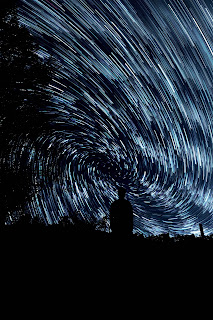
| photo by Jeremy Thomas on Unsplash |
| photo by Mitul Grover on Unsplash |
The integrative levels of Spiral Dynamics help us better empathize with others even as it helps us recognize our own blind spots. If the collective loss, grief, stress, and agony of this pandemic has taught me anything, it is that we all need each other to get through this. All the generations need each others' help, perspective, and insight. If we are going to solve the world's problems, every culture and generation will be a part of the solution. The higher levels of human consciousness let go of ethnocentrism and narrow thinking and invite everyone to the table. Humanity is spiraling up quickly, maybe even exponentially, as the centuries and the decades go by.
The higher we go together, the more space there is for hope, for healing, for light, for love.
Let's keep spiraling up.
(c) 2022 Chloe Koffas - all rights reserved, all images used under the Unsplash free license in 3/2022
_____________________
Sources/articles/podcasts/recommended further research:
The set of colors above are used by some researchers, others use a different set of colors to differentiate between levels.
There are several variations of Spiral Dynamics. All of the above is taking the research, knowledge and wisdom of others, filtering it through my own perspective and just adding a few thoughts. While this piece is incomplete in some ways, it also adds in a few new ideas to ideally help the conversation on this topic to evolve. I'm not an expert, though these are some of the experts and researchers that have contributed to this model: Don Edward Beck, Christopher Cowen, Clare Graves, Richard Dawkins, Ken Wilbur, Jean Gebser, Stanilav Grof, Fred Kofman, George Leonard, Michael Murphy, Jenny Wade, Roger Walsh, Mihaly Csikszentmihalyi, and Michael E. Zimmerman among others. See more on Spiral Dynamics on Wikipedia.
Mayank Chaturvedi posts a list of many of the models of human development and explains Spiral Dynamics:

| photo by Charles Etoroma on Unsplash |
Recommended podcasts:
Rob Bell and his son Trace Bell have a four part podcast series on Spiral Dynamics on 'The Robcast' from 2020 called 'Me, We, Everybody'
robbell.com/podcast
Richard Rohr discusses scarcity vs. abundance perspectives as well as the two halves of life - this can fill in some gaps and answer some of the questions that go with the way the way human consciousness levels up:
cac.org/scarcity-or-abundance-2018-07-05
cac.org/two-halves-life-2015-10-12


.jpg)

.jpg)
.jpg)